



Hybrid products
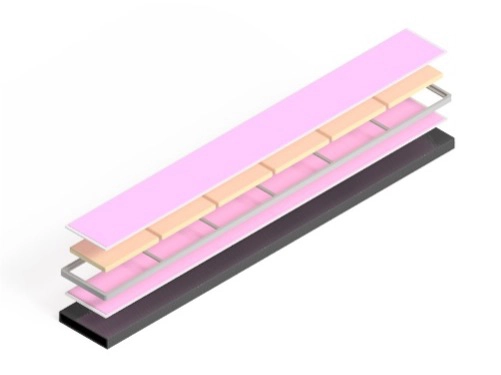
The trend in the automotive industry towards an 800 V architecture instead of the previous 400 V poses new challenges, particularly in the area of electrical insulation strength. For safety reasons, for example, a 2-layer structure of the TIM is required to ensure electrical insulation even in the event of contamination by metallic particles or air inclusions. There are various approaches for the 2-layer structure; products from the TIM and ceramic groups are often combined with each other
What are hybrid products?
an explanation
Basically, hybrid products can be divided into 2 sub-categories, namely hybrid foil and hybrid ceramic.
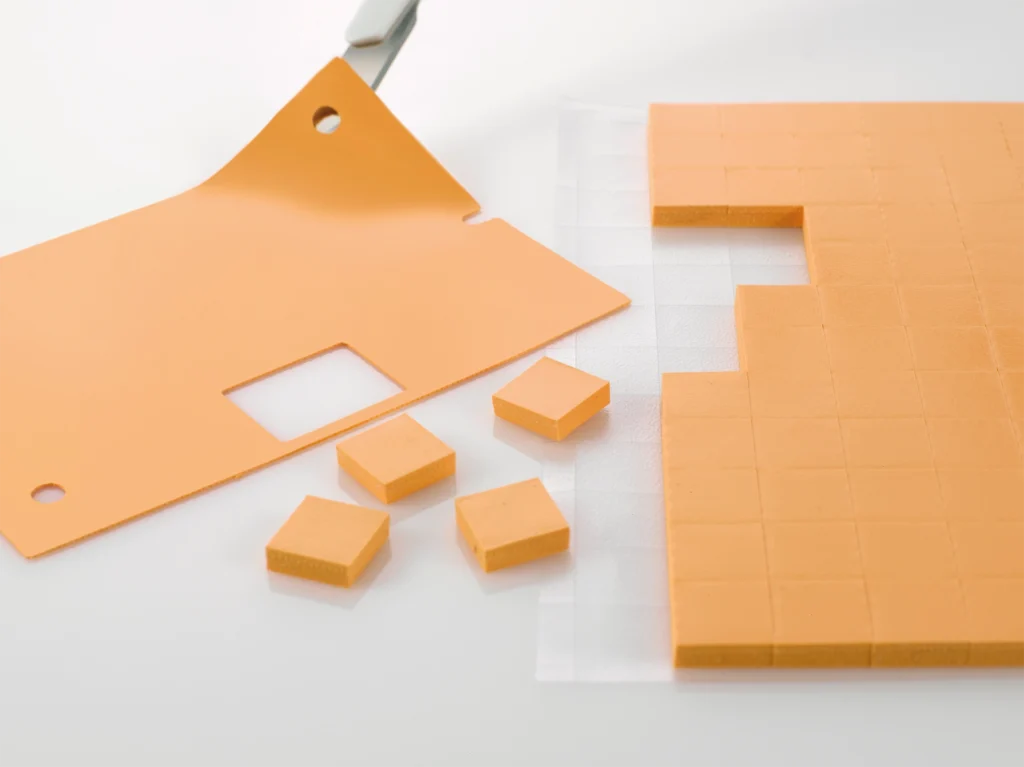
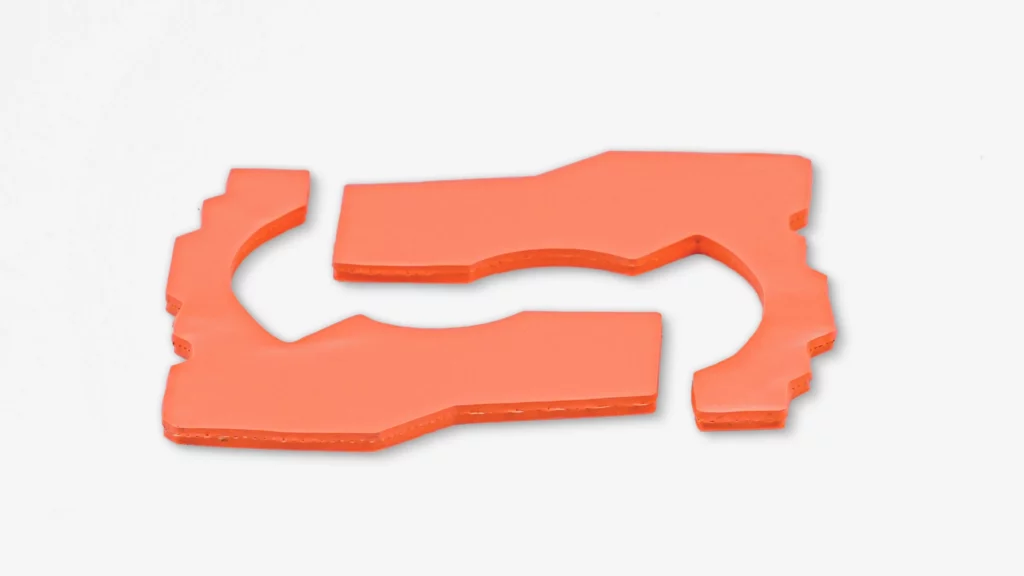
Hybrid foils include all products that consist of at least 2 TIMs. These include form-fit composites such as the 86/128 or 86/228 (combination of gap pad and heat conducting film) or the combination of heat conducting film and gap filler liquid.
Hybrid ceramics include all assemblies that contain ceramics (various material compositions and layer thicknesses) as a carrier substrate and are generally coated on both sides with a TIM (paste, PCM or gap filler).
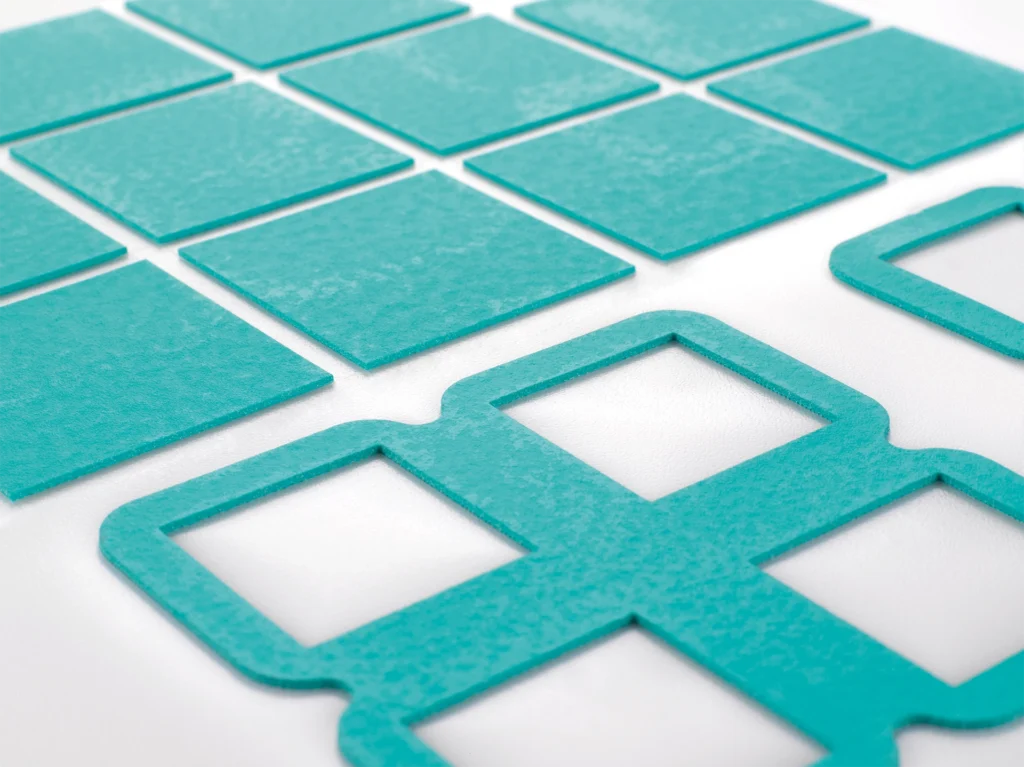
The combination of the form-fit composite of ceramic and heat conducting foil is still new on the market and goes by the name DUALTHERM.
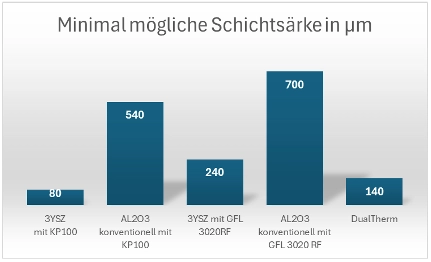
The new approach consists of coating the ceramic on both sides with a “heat conducting foil”. The ceramic is coated with a thermally conductive suspension using a special process directly at KERAFOL ®. After the suspension has been applied, the coated ceramic is dried, whereby the previously still viscous thermally conductive mass cross-links and forms an ultra-thin layer (up to 50 µm). The hybrid structure eliminates the otherwise necessary application process (e.g. screen printing or dispensing) of a thermally conductive paste/gap filler at the customer’s premises. The cross-linking of the suspension on the ceramic surface creates an air-free bond, which means that the thermal resistance is significantly lower compared to subsequent joining of the film and ceramic.
Key Facts
to the hybrid products from Kerafol ®
- Various combination options available
- Highly electrically insulating
- Low thermal resistance
- DualTherm as a completely new solution
- The right answer to increasing requirements in the power electronics sector
How are the hybrid products applied?
Application
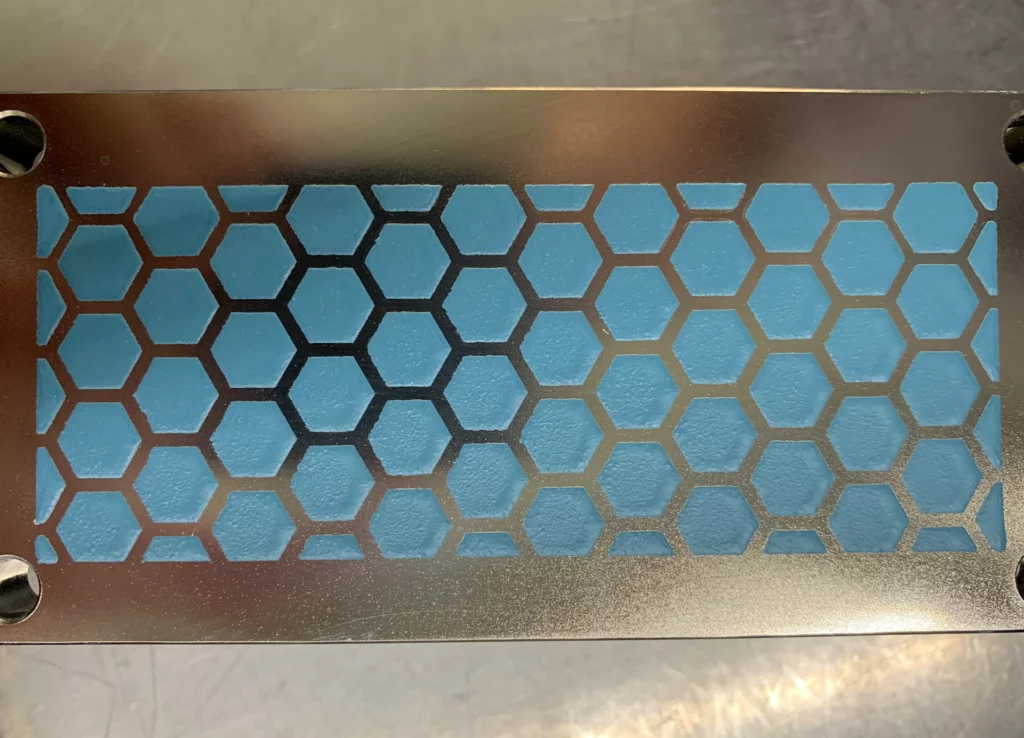
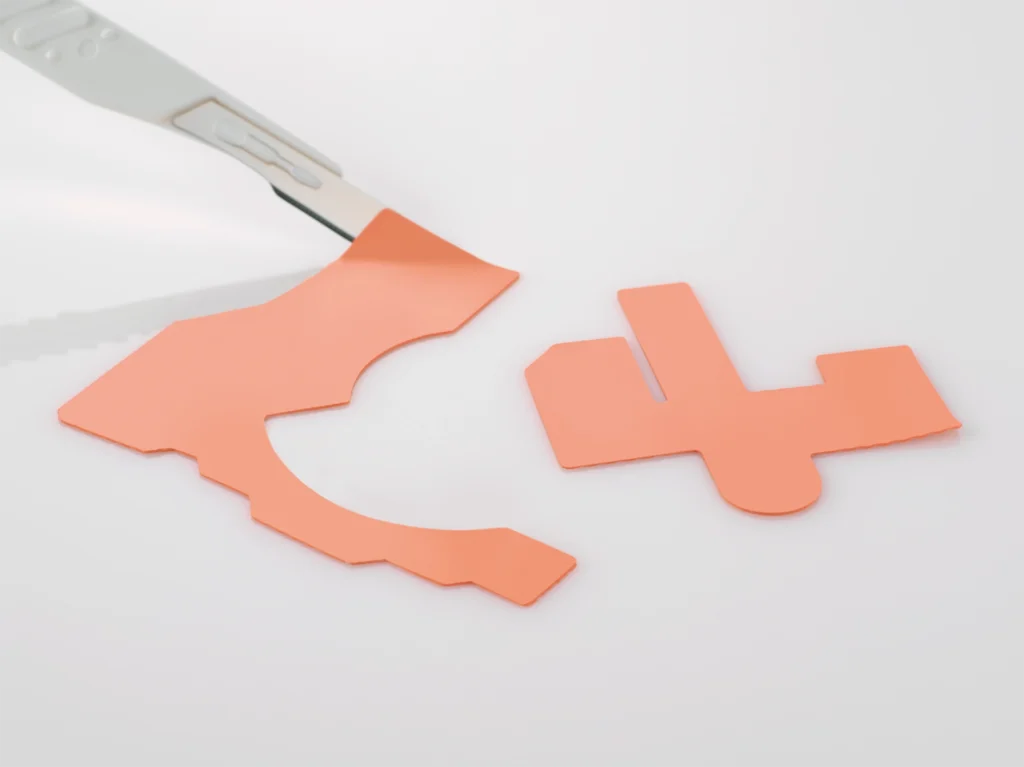
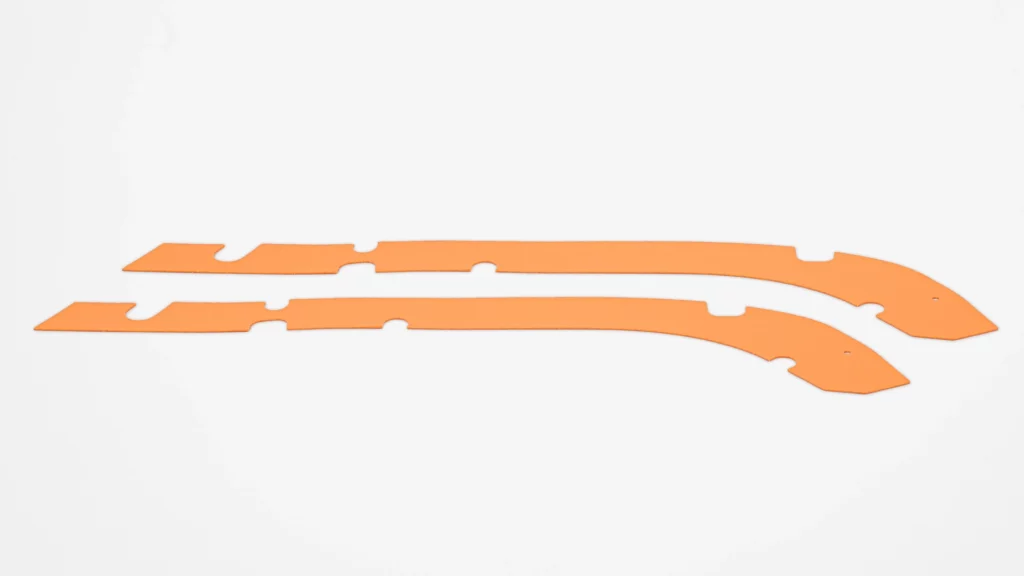
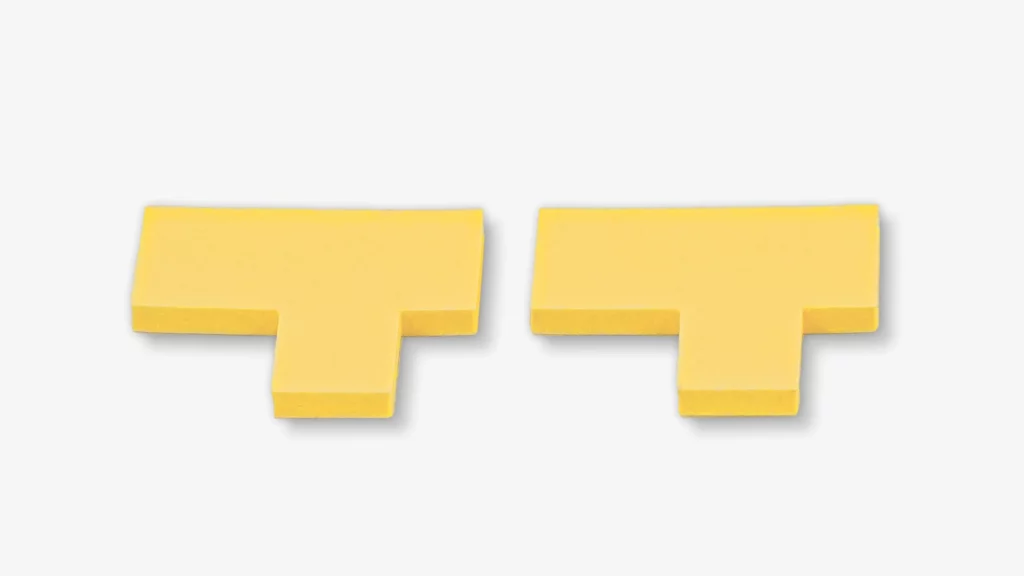
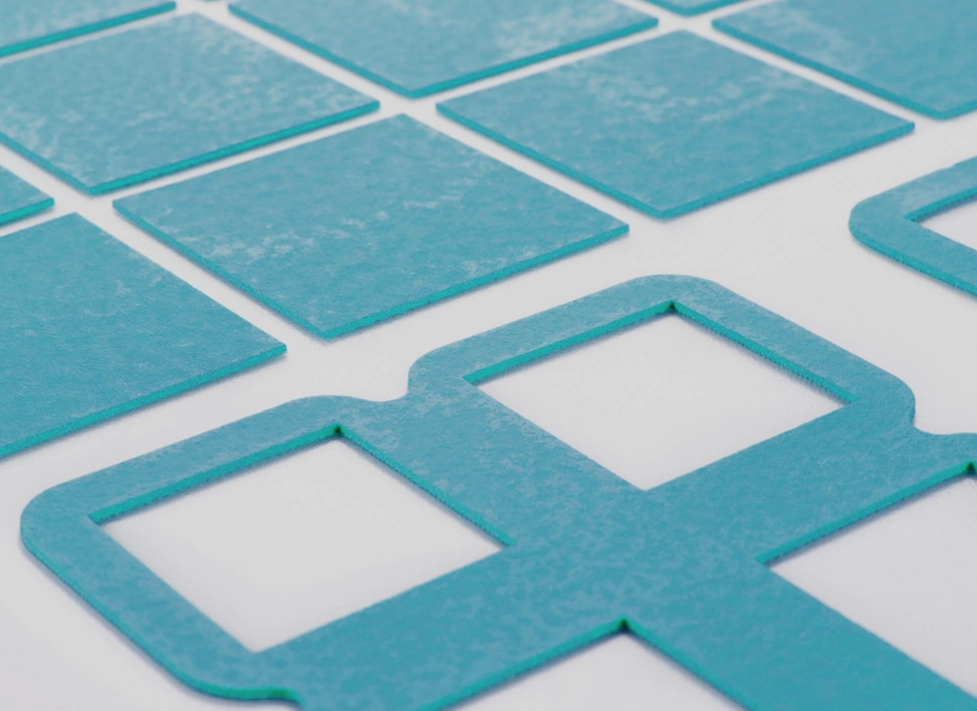
Hybrid products are available in various sizes and designs. Both the screen printing process, the coating of the DualTherm ceramic and the laser cutting are carried out using innovative process technology from KERAFOL ®.
Advantages
of the hybrid products from Kerafol ®
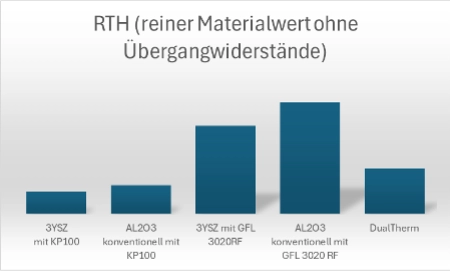
- Due to the clever layer structure, the hybrid ceramic achieves a minimal RTH
- The hybrid film achieves a high and reliable level of electrical insulation thanks to the minimum of 2 layers
- Thanks to the different basic modules (carriers, TIMs), there are many possible combinations, depending on customer requirements
- DUALTHERM: Both the flexible ceramic here and the heat-conducting layer applied directly to it are very robust and stable when combined
Delimitation
to other products
The requirements in the field of power electronics are very complex and also individual. It is therefore not possible to make a general statement about which TIM group should be used, as this depends on many factors.
Hybrid ceramics, i.e. the combination of ultra-thin ceramics coated on both sides, represent another solution. The multi-layered but very thin structure optimizes heat dissipation, electrical insulation and mechanical stability. Concepts such as DUALTHERM can also reduce the complexity of the customer’s process technology and represent a very robust and reliable system.
Hybrid materials appear more complex at first glance, but they will play an increasingly important role due to the increasing demands on insulation strength, especially if a 2-layer structure is required by standards anyway.
Overview
Hybrid products from Kerafol ®
Applications
of hybrid products
- In many power electronics applications and many other electronic assemblies
- Batteries, busbars
- For high component tolerances / large gap dimensions