



Electrolyte-supported cells
by KERAFOL®
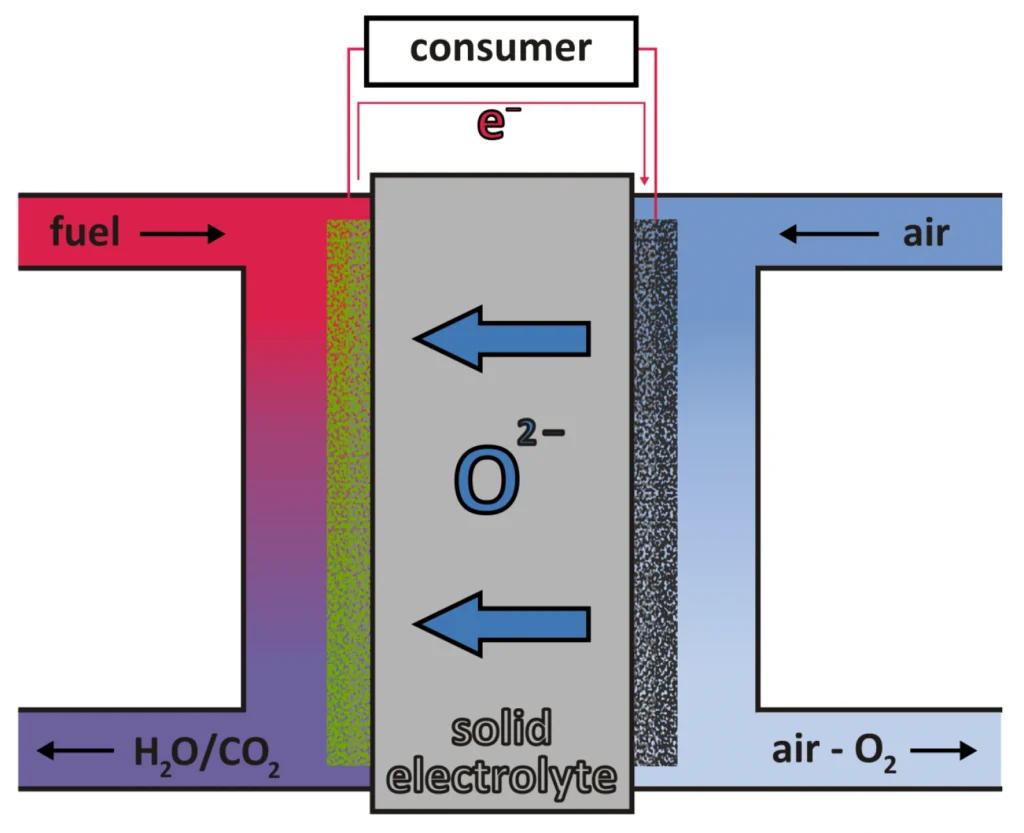
The ESC consists of an electrolyte that physically separates the anode and cathode and conducts oxygen ions at the high operating temperatures of 750–950°C. On the cathode side, oxygen molecules are absorbed from the gas phase in an electrochemical reaction, and oxygen ions are formed using electrons from the cathode. The oxygen ions move through the electrolyte to the anode side, where they react with hydrogen to form water, releasing electrons to the anode. As a result of these two reactions, a positive charge surplus is created at the cathode and a negative charge surplus at the anode, which can be harvested in the form of current. To achieve higher electrical voltages, multiple cells are connected in series to form a so-called stack, which serves as the current-delivering unit.
Variants
Electrolyte-supported substrates
Our electrolyte-supported cells exhibit high planarity and are optimized for use in SOFC stacks. To this end, efficient electrodes with low polarization resistances have been developed. The robustness of the cells has been demonstrated in several long-term tests, as well as through thermal cycling and reduction/oxidation cycle tests.
In the R&D department, the power density and robustness of the cells are continuously being optimized. In addition, the KeraCell III cell type was developed with an LSCF oxygen electrode, which provides high power density when used as both a fuel cell and an electrolysis cell.
- Oxygen electrode: LSM or LSCF
- Hydrogen electrode: NiO/YSZ or NiO/GDC
- Electrolyte substrates: 3YSZ, 8YSZ, 6ScSZ, 10Sc1CeSZ, YScSZ
Dimensions
according to customer requirements
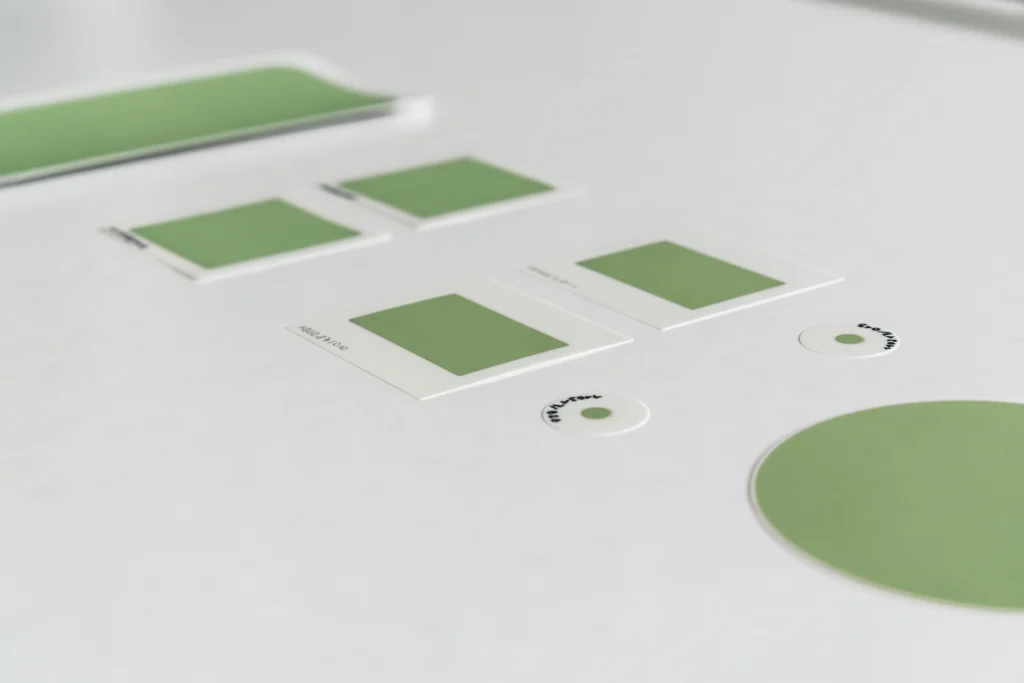
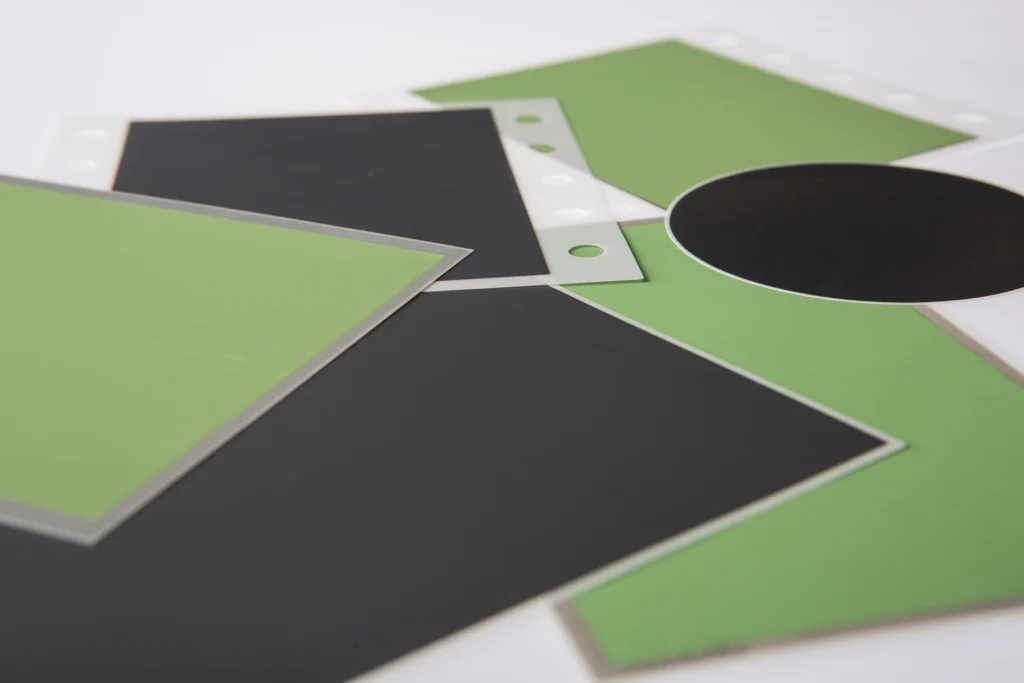
We offer electrolyte-based cells in the standard sizes 50 x 50 x 0.15 mm³ and 100 x 100 x 0.15 mm³. Upon customer request, we can produce a wide variety of round and rectangular geometries, as well as symmetrical cells and half-cells, depending on the geometry.
Zellen